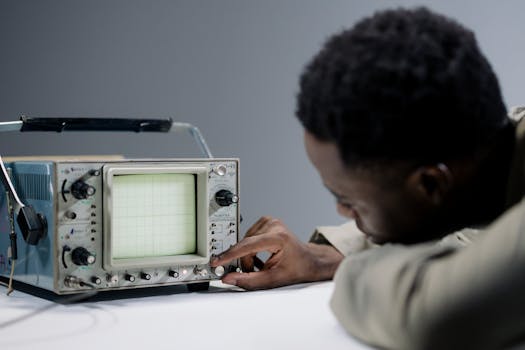
Picture this: a room buzzing with focused energy, not of frantic deadlines, but of quiet contemplation and excited discovery. Shelves laden with components, whiteboards scrawled with complex diagrams, and the distinct scent of soldering flux mingling with freshly brewed coffee. This isn’t just a cluttered office; it’s likely a technology lab. But what exactly is a technology lab, and why do we seem to encounter the term so frequently, yet often struggle to define its essence? It’s a concept that’s both incredibly tangible and surprisingly abstract, a crucible where ideas are forged into tangible realities.
What’s the Core Purpose? The Genesis of Innovation
At its heart, a technology lab is a dedicated space – physical or virtual – designed for experimentation, development, and the exploration of new technological frontiers. It’s a place where curiosity is the primary currency, and failure is not an endpoint but a stepping stone. Think of it as a research and development hub, but with a more hands-on, often less rigidly defined approach. The primary objective? To push boundaries, solve problems, and create something novel, whether it’s a groundbreaking piece of software, a revolutionary hardware prototype, or a refined scientific process. It’s where the “what if” questions get answered.
Diverse Forms: From Garage Workshops to Corporate Incubators
The beauty of the technology lab lies in its remarkable adaptability. It’s not a one-size-fits-all entity. You’ll find them in myriad forms, each tailored to specific goals and resources:
University Research Labs: Often at the forefront of theoretical advancements, these labs are where fundamental scientific principles are explored and potential future technologies are born. They might be investigating quantum computing, advanced materials, or AI ethics.
Corporate R&D Labs: These are the engines of product development and innovation for established companies. Their focus is typically on improving existing products, developing new ones, or exploring emerging tech that can give them a competitive edge.
Startup Incubators/Accelerators: These are dynamic environments, often co-working spaces equipped with shared resources, where early-stage companies can rapidly prototype and test their business ideas. The emphasis here is on speed and iteration.
Makerspaces and Community Labs: Accessible to the public, these spaces offer tools and a collaborative atmosphere for hobbyists, inventors, and entrepreneurs to bring their projects to life. They democratize access to technology and foster a culture of creation.
Virtual Labs: In our increasingly digital world, the concept of a technology lab extends beyond physical boundaries. Virtual labs leverage cloud computing, simulation software, and remote collaboration tools to enable experimentation and development without needing dedicated physical hardware for every task. This is particularly useful for software development, data science, and complex system modeling.
In my experience, the most successful labs, regardless of their form, share a common thread: a culture that encourages cross-pollination of ideas.
What Actually Happens Inside? The Process of Discovery
So, what’s the day-to-day like in a technology lab? It’s far from just assembling gadgets. The process often involves several key stages:
- Ideation and Hypothesis: This is where the spark ignites. Ideas are brainstormed, problems are defined, and initial hypotheses are formed. This might involve literature reviews, market research, or simply group discussions.
- Prototyping and Experimentation: Here, the abstract becomes concrete. Prototypes are built, code is written, circuits are tested, and experiments are designed and executed. This is the hands-on, iterative phase where the rubber meets the road.
- Testing and Analysis: Rigorous testing is crucial. Data is collected, analyzed, and interpreted to validate or invalidate the initial hypotheses. This is where the critical thinking really comes into play, dissecting results and identifying patterns.
- Iteration and Refinement: Based on the testing results, the prototype or concept is refined. This is a cycle – design, build, test, learn, repeat – that continues until the desired outcome is achieved or a significant learning has occurred.
- Documentation and Dissemination: The findings, processes, and results are meticulously documented. This ensures knowledge is preserved, shared within the team, and potentially contributed to the broader scientific or technological community through publications or presentations.
It’s a journey that demands patience, resilience, and a healthy dose of intellectual grit.
The Unseen Impact: Shaping Our Future
The work that goes on within technology labs, however niche or experimental it may seem, has a profound and far-reaching impact on our lives. Every smartphone app, every medical advancement, every sustainable energy solution, and every piece of cutting-edge software likely traces its lineage back to a technology lab. These spaces are incubators for the solutions to tomorrow’s challenges, from climate change to disease eradication.
Consider the development of mRNA vaccines, a testament to decades of research in university and pharmaceutical technology labs. Or the advancements in AI that are transforming industries, born from countless hours of coding and experimentation. The very infrastructure of the internet, the devices we use daily, and the way we communicate are all products of relentless exploration within these innovation hubs.
Beyond the Buzzwords: Fostering a Culture of Inquiry
Ultimately, a technology lab is more than just a collection of tools or a physical location. It’s a mindset. It’s about cultivating an environment where asking difficult questions is encouraged, where diverse perspectives are valued, and where the pursuit of knowledge trumps the fear of making mistakes. It’s a commitment to continuous learning and adaptation in a world that’s constantly evolving.
Wrapping Up: Your Next Step in Technological Exploration
The essence of a technology lab is its commitment to the process* of discovery. If you’re looking to understand how innovation truly happens, don’t just look at the finished product. Seek out the stories of the labs where they were born, understand the challenges faced, and appreciate the iterative journey. My advice? Start exploring the publicly accessible research and development sections of companies you admire, or even consider joining a local makerspace – these are accessible entry points into understanding the dynamic world of technology labs.